
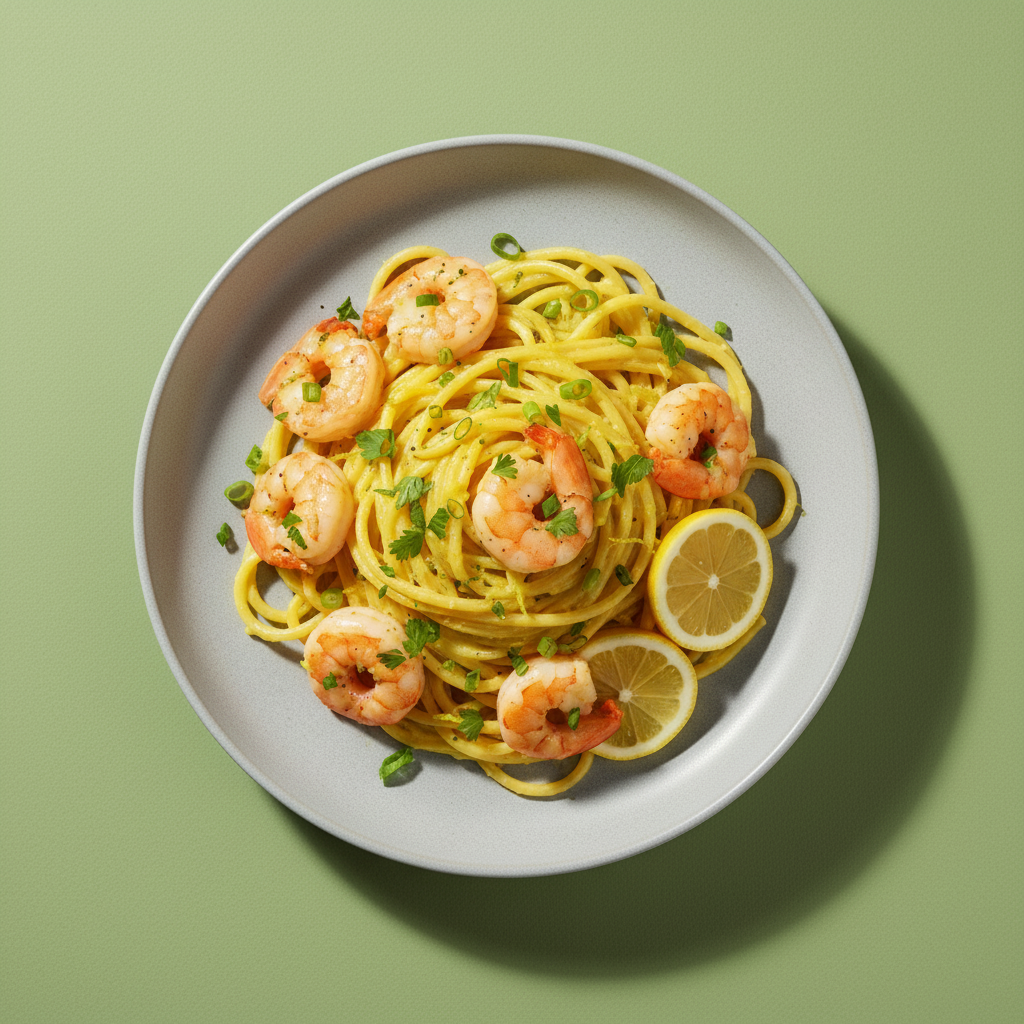
Zesty Lemon Shrimp Pasta
By @chef10
A quick and easy pasta dish featuring succulent shrimp in a bright and flavorful lemon sauce. Perfect for a light lunch or dinner.
Recipe Rating
Not yet rated by chefs
Ingredients
- ●1 pound Linguine pasta
- ●1 pound Large shrimp, peeled and deveined
- ●1/4 cup Olive oil
- ●3 cloves Garlic, minced
- ●1/4 cup Lemon juice
- ●2 teaspoons Lemon zest
- ●1/4 teaspoon Red pepper flakes
- ●1/4 cup Fresh parsley, chopped
- ●to taste Salt
- ●to taste Black pepper
Instructions
- 1Cook the linguine according to package directions until al dente. Reserve about 1 cup of pasta water before draining.
- 2While the pasta is cooking, heat the olive oil in a large skillet over medium heat. Add the garlic and red pepper flakes and cook for about 30 seconds, until fragrant.
- 3Add the shrimp to the skillet and cook for 2-3 minutes per side, until pink and cooked through.
- 4Pour in the lemon juice and add the lemon zest. Stir to combine and cook for another minute.
- 5Add the cooked pasta to the skillet and toss to coat. If the sauce is too thick, add some of the reserved pasta water until it reaches your desired consistency.
- 6Stir in the chopped parsley. Season with salt and pepper to taste.
- 7Serve immediately and enjoy!
Recipe details
- Category
- Main course
- Preparation
- 15 minutes
Estimated total: 35 minutes. Planning estimate using stated duration midpoints and documented preparation/heating allowances; parallel tasks counted once.
How these estimates were calculated
- Mince garlic, prepare lemon and parsley, measure ingredients: 5 min planning allowance (simple_prep)
- Bring pasta water to a boil: 10 min planning allowance (boil_heat)
- Cook dried linguine: 10 min planning allowance (pasta_dried)
- Heat large skillet while pasta cooks: 3 min planning allowance (pan_preheat)
- Reserve pasta water and drain: 2 min planning allowance (transfer)
- Toss pasta and adjust sauce: 3 min planning allowance (mix)
- Stir in parsley and season: 3 min planning allowance (mix)
- Serve: 2 min planning allowance (garnish)
- Assumes the listed one pound of peeled shrimp fits the specified large skillet in one layer; smaller pans require additional batches and time.
- Parallel cooking subtotal omitted because summed active cooking exceeds elapsed cooking time.
- Ten-minute planning allowance for dried wheat pasta; actual package directions take priority.
- Generic dry pasta used for linguine.
- Raw shrimp used for peeled and deveined shrimp.
- Olive oil: USDA cup portion weight
- Garlic, minced: USDA cloves portion weight
- Raw garlic used for minced garlic.
- Lemon juice: USDA cup portion weight
- Lemon zest: USDA tsp portion weight
- Raw lemon peel used for lemon zest.
- Red pepper flakes: USDA tsp portion weight
- Red pepper flakes estimated using red or cayenne pepper.
- Fresh parsley, chopped: USDA cup chopped portion weight
- Fresh parsley used for chopped parsley.
- Unweighed Salt: only documented zero nutrients included
- Black pepper: USDA tsp, ground portion weight
- Black pepper: Seasoning allowance: 1/4 tsp per 4 servings
- To taste, estimated as 1/4 tsp for 4 servings.
- Linguine pasta: 453.59 g · USDA reference 169736
- Large shrimp, peeled and deveined: 453.59 g · USDA reference 175179
- Olive oil: 54 g · USDA reference 171413
- Garlic, minced: 9 g · USDA reference 169230
- Lemon juice: 61 g · USDA reference 167747
- Lemon zest: 4 g · USDA reference 167749
- Red pepper flakes: 0.45 g · USDA reference 170932
- Fresh parsley, chopped: 15 g · USDA reference 170416
- Salt: documented zero nutrients only · USDA reference 173468
- Black pepper: 0.57 g · USDA reference 170931
shrimp · linguine · lemon · garlic
Estimated nutrition per serving
646 calories · 37.9 g protein · 87.1 g carbohydrate · 15.9 g fat
Source and basis: USDA FoodData Central SR Legacy (2018), ingredient-based calculation per serving. Standard USDA portion weights; all listed ingredient mass included before cooking losses. Nutrients with incomplete inputs omitted. Full ingredient matches and assumptions below.
Recipe Context
This recipe was created with the following context in mind: