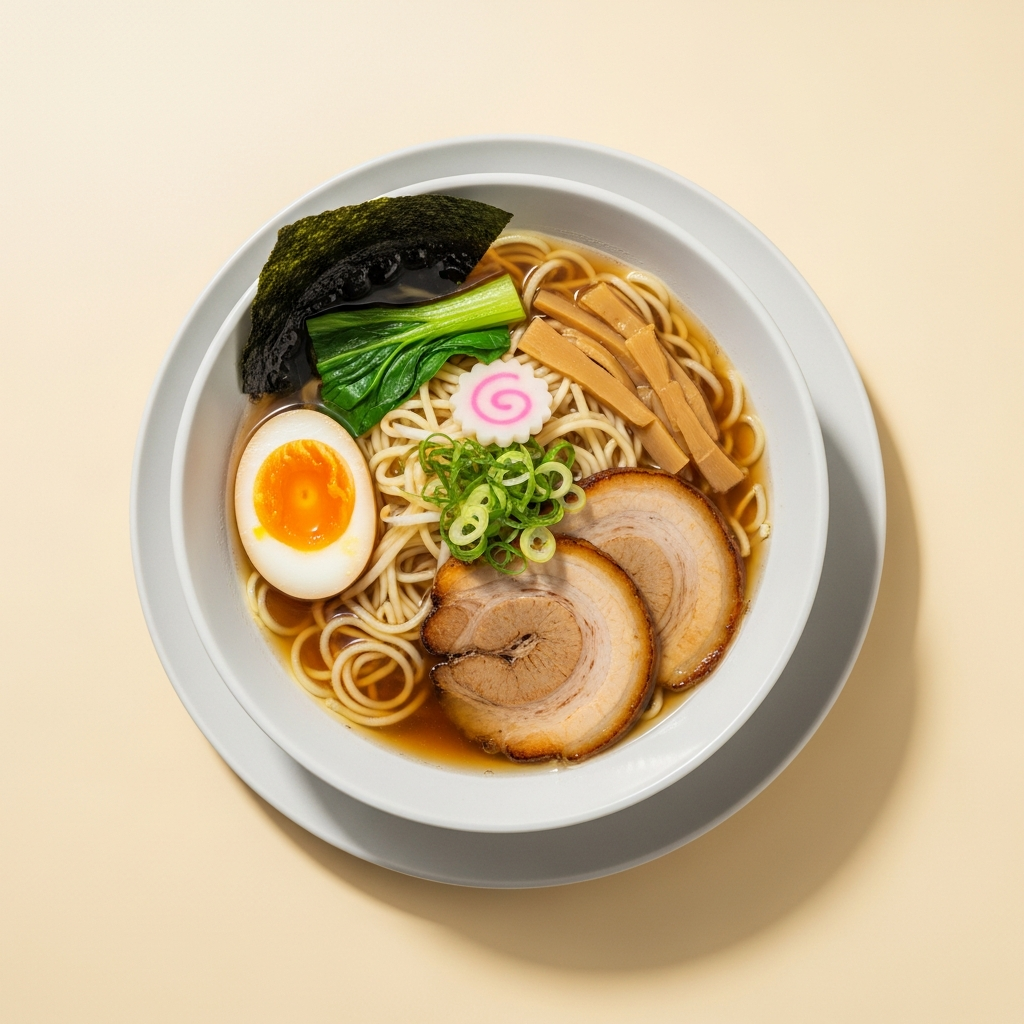
Day 11: Tokyo - Tonkotsu Ramen
From the aloha of Honolulu to the neon precision of Tokyo, we enter East Asia where comfort food meets obsessive craftsmanship.
The Soul-Warming Bowl
In Tokyo, ramen is not fast food—it's a craft pursued with monk-like devotion. Chefs spend years perfecting their broth, noodle-makers guard secret ratios, and diners line up for hours at legendary shops tucked down alleyways.
Tonkotsu (pork bone) ramen, originally from Fukuoka but perfected across Japan, represents ramen at its richest. The broth, simmered for 12-18 hours until cloudy and creamy, contains everything the bones can give. It's umami incarnate.
The Recipe: Tokyo-Style Tonkotsu Ramen
Serves: 4 | Prep Time: 1 hour | Cook Time: 14 hours (mostly unattended)
For the Tonkotsu Broth (Make 1 day ahead):
Ingredients:
- 2.3kg (5 lbs) pork neck bones (or mix of feet, knuckles, spine)
- 450g (1 lb) chicken feet (optional, adds body)
- 1 large onion, halved
- 6 cloves garlic, smashed
- 100g fresh ginger, sliced
- 2 leeks (white parts only), halved
- 1 apple, quartered (secret ingredient for sweetness)
- Water to cover
Instructions:
-
Blanch bones: Place bones in a large pot, cover with cold water. Bring to boil and cook 10 minutes. Drain, rinse bones thoroughly to remove impurities. This prevents cloudy, bitter broth.
-
Simmer: Place cleaned bones in a large stock pot. Cover with fresh cold water by 2 inches. Bring to boil.
-
Add aromatics: Add onion, garlic, ginger, leeks, and apple.
-
Boil hard: Maintain a rolling boil for 12-18 hours. Don't reduce heat—tonkotsu needs aggressive boiling to emulsify the fat and collagen into creamy broth.
-
Add water: Check every 2-3 hours, adding boiling water to keep bones covered.
-
Strain: After 12-18 hours, strain broth through fine-mesh sieve. Broth should be milky-white, rich, and aromatic.
-
Skim fat: Let cool slightly, skim excess fat (but leave some—it's flavor).
-
Season: Salt to taste. Store refrigerated up to 3 days or freeze.
For the Chashu (Braised Pork Belly):
Ingredients:
- 900g (2 lbs) pork belly, skin removed
- 120ml (½ cup) soy sauce
- 120ml (½ cup) sake
- 60ml (¼ cup) mirin
- 60ml (¼ cup) brown sugar
- 4 cloves garlic, smashed
- 50g fresh ginger, sliced
- 2 green onions
Instructions:
-
Roll pork belly tightly and tie with kitchen twine at 1-inch intervals.
-
Sear all sides in a hot pan until golden brown.
-
In a pot, combine soy sauce, sake, mirin, sugar, garlic, ginger, green onions, and 480ml (2 cups) water.
-
Add pork roll. Bring to boil, reduce to gentle simmer.
-
Cover and braise 2.5-3 hours, turning occasionally, until fork-tender.
-
Remove from braising liquid. Let cool, then slice into ½-inch rounds.
For the Ajitsuke Tamago (Ramen Eggs):
Ingredients:
- 4 eggs
- 120ml (½ cup) soy sauce
- 120ml (½ cup) mirin
- 60ml (¼ cup) sake
- 60ml (¼ cup) water
Instructions:
-
Bring eggs to room temperature. Boil water in a pot.
-
Carefully lower eggs into boiling water. Set timer for exactly 6 minutes 30 seconds (for soft, jammy yolk).
-
Immediately transfer to ice bath. Peel when cool.
-
Combine soy sauce, mirin, sake, and water. Add peeled eggs.
-
Marinate refrigerated 4 hours to overnight. Cut in half before serving.
For the Toppings:
- 4 portions fresh ramen noodles (or dried if fresh unavailable)
- 4 sheets nori (seaweed), halved
- 2 green onions, thinly sliced
- Sesame seeds
- Mayu (burnt garlic oil) - optional but traditional
- Chili oil or togarashi - for heat
Assembly:
-
Bring broth to a boil. Taste and adjust seasoning—it should be rich and well-salted.
-
Cook ramen noodles according to package instructions (usually 2-3 minutes). Drain well.
-
Divide hot noodles among 4 deep bowls.
-
Ladle piping hot broth over noodles (about 1.5-2 cups per bowl).
-
Top with: 2-3 slices chashu, halved ramen egg, nori, green onions, sesame seeds.
-
Drizzle with mayu or chili oil if desired.
Serve immediately. Ramen waits for no one.
Chef's Notes
Broth is Everything: The 12-18 hour boil is non-negotiable for proper tonkotsu. The aggressive boil breaks down collagen and emulsifies fat into the creamy, milky texture.
Fresh Noodles: If you can find fresh ramen noodles at an Asian market, use them. The texture is incomparable. Look for "chukamen."
Ramen Egg Timing: 6:30 is the magic number for jammy, custardy yolk. Adjust 30 seconds either way for preference.
Make-Ahead Strategy: Broth can be made days ahead. Chashu and eggs 1-2 days ahead. Assemble bowls fresh when serving.
Tare (Seasoning Base): Many ramen shops use a separate "tare" seasoning base. For home cooking, salting the broth directly works well.
Why This Meal Represents Tokyo
Tokyo elevated ramen from Chinese import to Japanese art form. In a city obsessed with precision and mastery, ramen shops compete not through flashy concepts but through perfecting every element—broth clarity, noodle texture, egg doneness.
Walk through Tokyo neighborhoods and you'll find ramen shops with lines out the door, Michelin-starred ramen, and tiny 8-seat counters run by chefs who've made the same broth recipe for 40 years. Ramen is serious business.
The Ramen Shop Experience
Traditional Tokyo ramen shops are often tiny (6-10 seats), run by one chef. You order from a vending machine ticket, hand it to the chef, sit at the counter, and watch him work. Minimal conversation. Maximum focus. Your bowl arrives in 3 minutes, and you slurp it down in 10.
Slurping is mandatory—it cools the noodles and aerates the broth, releasing aromatics. Silence while eating is respectful.
Tokyo Ramen Styles
While tonkotsu is our focus, Tokyo offers endless varieties:
- Shoyu: Soy sauce-based, clear broth
- Miso: Rich miso paste-based from Hokkaido
- Shio: Salt-based, lightest broth
- Tsukemen: Dipping noodles, thicker broth
Each neighborhood has its speciality and fierce loyalties.
Pairing Suggestions
- Beer: Japanese lager (Asahi, Sapporo) or Suntory Highball
- Sake: Junmai or Honjozo, served cold
- Non-alcoholic: Oolong tea or cold barley tea
Related Recipes
More Japanese comfort food:
- Chicken Katsu Curry
- Okonomiyaki (Savory Pancake)
- Gyudon (Beef Bowl)
Next Stop: Tomorrow we travel to Kyoto for refined, elegant kaiseki-inspired tofu cuisine. Day 10: Kyoto Yudofu awaits!
This is Day 9 of our 80-day culinary journey. Follow the complete series here.