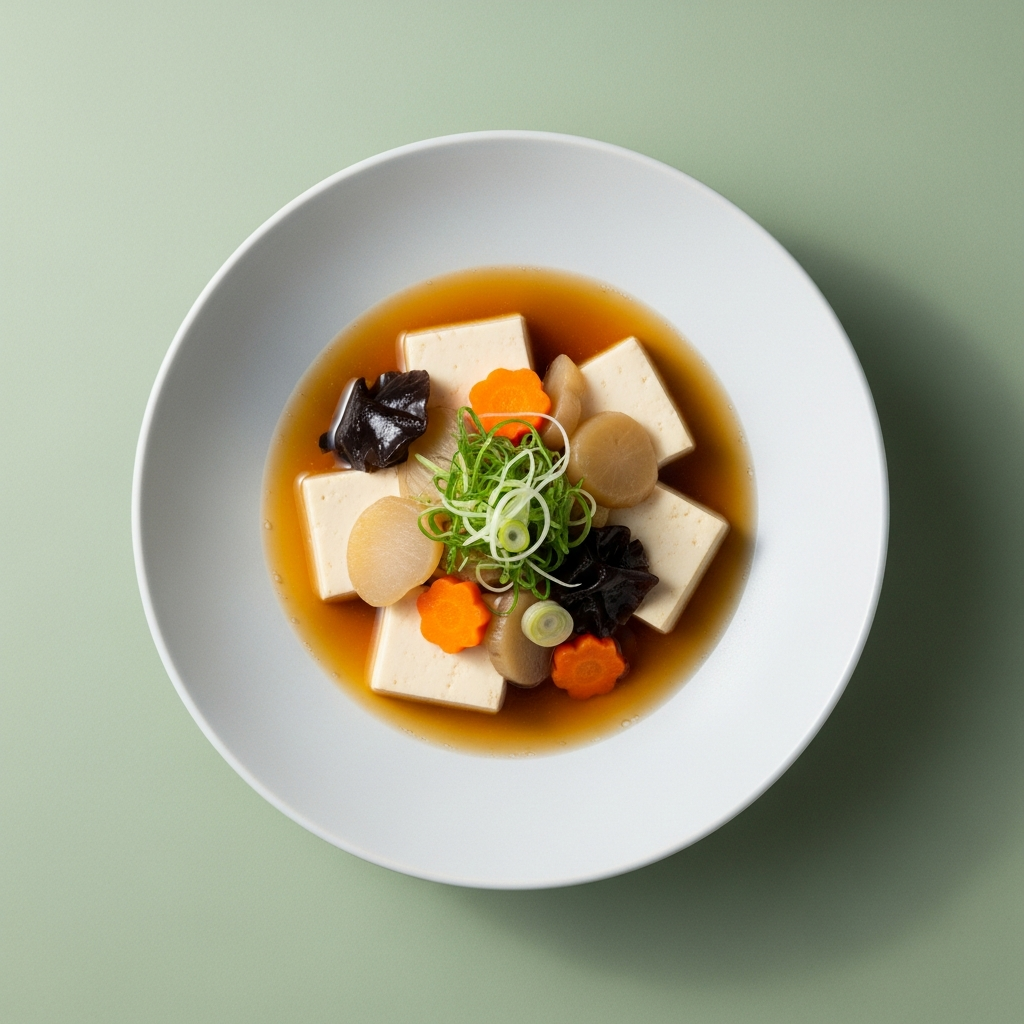
Day 12: Kyoto - Yudofu (Simmered Tofu Hot Pot)
From Tokyo's intense ramen culture to Kyoto's zen-like simplicity, we discover how Buddhist philosophy transformed dinner into meditation.
The Temple Food That Became Tradition
Yudofu—literally "hot water tofu"—originated in Kyoto's Buddhist temples as part of shojin ryori (Buddhist vegetarian cuisine). Monks developed this style of cooking, which avoids animal products while honoring ingredients through minimal intervention.
What seems impossibly simple—tofu simmered in kombu broth—is actually a lesson in appreciating subtle flavors and perfect execution. In Kyoto, restaurants near temples like Nanzen-ji have been serving yudofu for centuries, often in traditional tatami rooms overlooking zen gardens.
The Recipe: Kyoto-Style Yudofu Hot Pot
Serves: 4 | Prep Time: 15 minutes | Cook Time: 20 minutes
For the Kombu Dashi:
Ingredients:
- 2 liters (8 cups) soft water (low mineral content is traditional)
- 2 pieces dried kombu (kelp), about 15cm x 10cm each
- Optional: 2 dried shiitake mushrooms for added depth
Instructions:
-
Wipe kombu gently with a damp cloth (don't wash—surface white powder is umami).
-
Place kombu and water in a pot. Let soak 30 minutes to 1 hour at room temperature. This cold extraction is key to avoiding bitterness.
-
Heat slowly over low-medium heat. Remove kombu just before water boils (around 175°F/80°C). Boiling makes kombu slimy and bitter.
-
If using shiitake, let them steep in the hot broth for 10 minutes, then remove.
-
Your dashi should be delicate, clear, and subtly oceanic.
For the Yudofu:
Ingredients:
- 900g (2 lbs) silken tofu (kinugoshi), cut into 2-inch cubes
- Reserved kombu from dashi (cut into small pieces for serving)
- 8 fresh shiitake mushrooms, stems removed
- 1 bunch mizuna greens or baby spinach
- 4 green onions, cut into 2-inch pieces
- Optional: yuba (tofu skin), mochi (rice cake)
For the Dipping Sauce (Ponzu):
- 120ml (½ cup) soy sauce
- 60ml (¼ cup) rice vinegar
- 60ml (¼ cup) fresh lemon or yuzu juice
- 30ml (2 tbsp) mirin
- 10g bonito flakes (or skip for vegetarian)
- 1 piece kombu, small
For Condiments:
- Grated daikon radish
- Grated fresh ginger
- Thinly sliced green onions
- Shichimi togarashi (seven-spice blend)
- Sesame seeds
Instructions
Make the Ponzu (can be made days ahead):
-
Combine soy sauce, rice vinegar, citrus juice, mirin, bonito flakes, and kombu in a jar.
-
Refrigerate 24 hours, then strain. Store refrigerated up to 2 weeks.
Prepare the Hot Pot:
-
Pour kombu dashi into a donabe (clay pot) or wide, shallow pot suitable for table cooking.
-
Bring to a very gentle simmer over medium-low heat. The broth should barely bubble—aggressive boiling will break the delicate tofu.
-
Gently add tofu cubes. Simmer 3-4 minutes until heated through but still tender.
-
Add shiitake mushrooms and cook 2-3 minutes.
-
Add greens and green onions just before serving—they should wilt slightly but remain vibrant.
Serve:
-
Set the pot on a portable burner at the table to keep warm.
-
Give each diner a small bowl of ponzu sauce and a plate of condiments (grated daikon, ginger, green onions).
-
Diners lift tofu gently with a slotted spoon, dip in ponzu customized with condiments, and enjoy.
-
Serve with steamed rice and simple pickles on the side.
Chef's Notes
Tofu Quality Matters: Use the highest-quality silken tofu you can find. In Kyoto, fresh morning-made tofu is standard. Soft texture and fresh soy flavor are essential.
Gentle Heat: The broth should barely simmer. Aggressive boiling will destroy the tofu's delicate texture.
Water Quality: Traditional yudofu uses Kyoto's famously soft water. If your tap water is hard, use filtered or bottled water.
Seasonal Variations: Change vegetables by season—chrysanthemum greens in fall, bamboo shoots in spring, fu (wheat gluten) in winter.
Tabletop Experience: Yudofu is traditionally cooked at the table using a portable burner. This keeps everything hot and turns dinner into a communal, mindful experience.
Vegetarian/Vegan: Omit bonito flakes from ponzu for fully vegan version.
Why This Meal Represents Kyoto
Kyoto, Japan's ancient capital and cultural heart, embodies refinement, tradition, and restraint. Yudofu perfectly captures this aesthetic—it's not about bold flavors or complexity, but about respecting ingredients and honoring simplicity.
In a city famous for kaiseki (multi-course haute cuisine) and tea ceremony precision, yudofu represents accessible zen. It's food that asks you to slow down, pay attention, and find beauty in subtlety.
The Temple Connection
Many yudofu restaurants in Kyoto are located near or within temple grounds. After touring temples like Nanzen-ji or visiting zen gardens, sitting down to yudofu in a traditional room feels like an extension of the meditative experience.
Eating yudofu is meant to be peaceful, simple, and mindful—qualities at the heart of Kyoto's Buddhist heritage.
Shojin Ryori Philosophy
Buddhist vegetarian cuisine (shojin ryori) follows principles:
- Respect for life - no animal products
- No waste - use every part of ingredients
- Five colors - visual harmony (white, black, red, green, yellow)
- Five flavors - balance (sweet, salty, sour, bitter, umami)
- Seasonal awareness - eat what's naturally available
Yudofu embodies these principles beautifully.
The Perfect Pairing
- Sake: Kyoto's local junmai sake served warm or cold
- Tea: Sencha green tea or roasted hojicha
- Beer: Light Japanese lager
- Non-alcoholic: Genmaicha (green tea with roasted rice)
Related Recipes
More Kyoto and temple-inspired dishes:
- Agedashi Tofu (Fried Tofu in Broth)
- Kaiseki-Style Seasonal Vegetables
- Matcha Soba Noodles
Next Stop: Tomorrow we continue through Japan to Osaka for street food that invented casual dining. Day 11: Osaka Okonomiyaki awaits!
This is Day 10 of our 80-day culinary journey. Follow the complete series here.
Reflection: First 10 Days Complete
We've completed the first leg of our journey! From New York's coal-fired pizza to Kyoto's meditative tofu, we've experienced America's immigrant food traditions, Hawaiian fusion, and Japan's spectrum from intense ramen to zen simplicity.
Next week: We continue through Japan, cross to Korea, then dive into China and Southeast Asia's explosive flavors. The journey is just beginning.