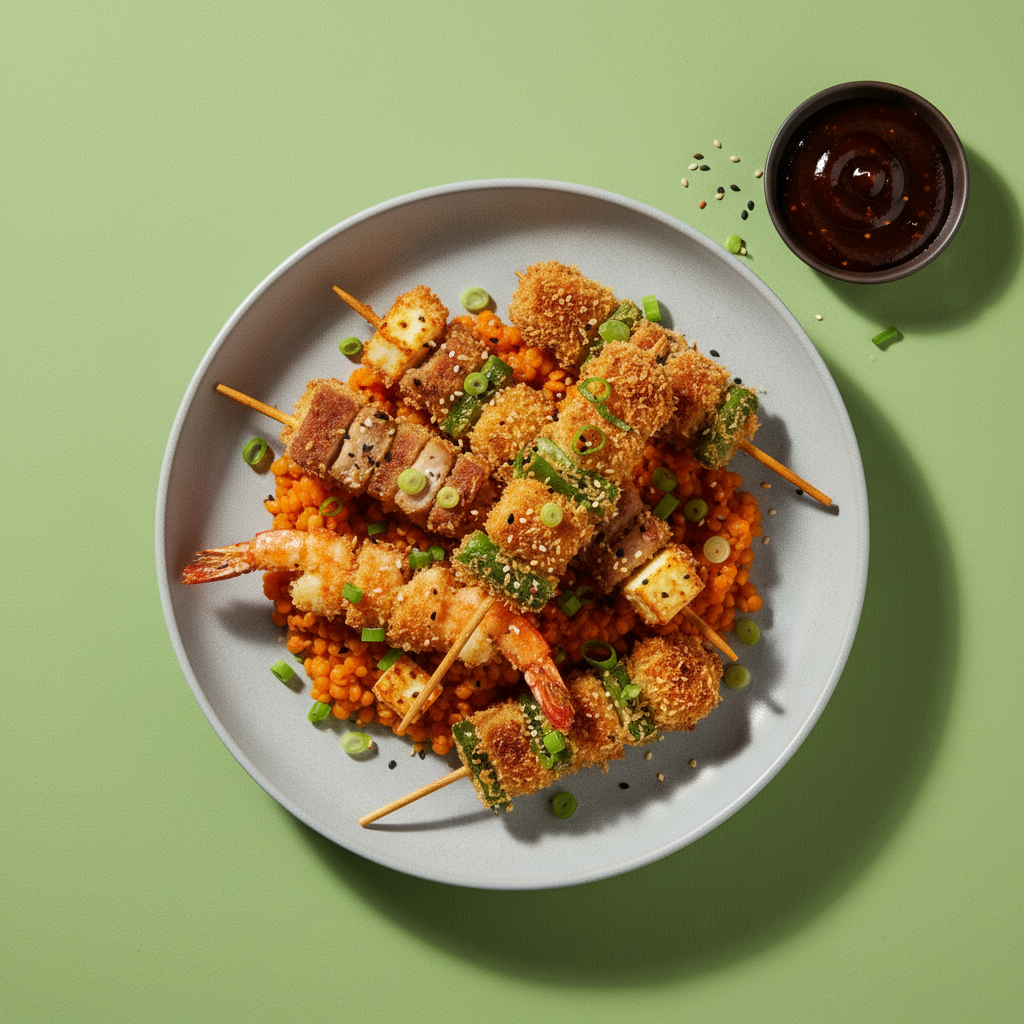
The glow of my laptop screen illuminates my face, another late night fueled by culinary curiosity. Tonight, Osaka is on the menu, and specifically, kushikatsu - those irresistible deep-fried skewers that seem to embody the spirit of Japanese street food. But here's the thing: I haven't been to Osaka. This isn't a travelogue; it's a kitchen quest.
So, how do you capture the essence of a place and a dish you've only experienced through screens and pages? That's the challenge I've set for myself with this "Around the World" series. And tonight, it means diving deep into the world of kushikatsu.
The Allure of Shinsekai on Screen
My research started, as it often does, with a YouTube spiral. Videos of bustling kushikatsu shops in Osaka's Shinsekai district filled my screen. The sizzle of the oil, the clatter of skewers, the boisterous laughter of locals – it was intoxicating. I watched countless chefs expertly dunking skewers into bubbling oil, each one emerging transformed into a golden-brown masterpiece. The shared tare sauce, the "no double-dipping" rule... it all painted a picture of a vibrant and communal food experience.
Next, I turned to my cookbook collection. I have a few Japanese cookbooks, but none dedicated solely to Osaka cuisine. However, I found some helpful information on kushikatsu variations and batter recipes in "Japanese Soul Cooking" by Tadashi Ono and Harris Salat, and "Izakaya: The Japanese Pub Cookbook" by Mark Robinson. I was on my way.
The Quest for the Perfect Batter
The key to great kushikatsu, it seems, is the batter. It needs to be light enough to create a crispy coating, but substantial enough to adhere to the skewer. Most recipes called for a simple combination of flour, egg, and water. Some added panko breadcrumbs for extra crunch.
My first attempt was a disaster. The batter was too thin, and it slid right off the skewers. The oil was too hot, and the kushikatsu burned before the ingredients inside were cooked through. Back to the drawing board.
Pro Tip: Don't overcrowd the pot! Fry kushikatsu in batches so that the oil temperature remains constant. Overcrowding will lower the temperature and result in soggy skewers.
I adjusted the batter, adding more flour to thicken it up. I also lowered the oil temperature and experimented with different frying times. Finally, I started to get somewhere. The batter was clinging nicely to the skewers, and the kushikatsu were cooking evenly.
My Kitchen Kushikatsu Creation
I decided to try a few different fillings:
- Pork and Scallion: A classic combination, the savory pork and sharp scallion worked perfectly together.
- Asparagus and Cheese: I wrapped asparagus spears in a slice of mozzarella and skewered them. The result was surprisingly delicious.
- Sweet Potato: A vegetarian option that added a touch of sweetness to the savory kushikatsu.
For the tare sauce, I combined Worcestershire sauce, soy sauce, ketchup, and a touch of sugar, simmering it until it thickened slightly. It wasn't quite the same as the tare I saw in the videos, but it was a decent substitute.
Substitution Suggestion: If you're looking for a vegetarian option, try skewering shiitake mushrooms, eggplant, or even tofu. Just make sure to press the tofu to remove excess moisture before frying.
The Journey Continues
While my homemade kushikatsu might not be a perfect replica of what you'd find in Osaka, it was a delicious and satisfying experience. It reminded me that even without physically traveling, we can still explore the world through food.
And who knows, maybe one day I'll make it to Osaka and taste the real thing. Until then, I'll keep experimenting in my kitchen, chasing the perfect deep-fried skewer. Next stop: Kyoto!